
Industrial Digital
Transformation by Industry
End-to-end solutions tailored for each industry to optimize performance and enable data-driven decisions
Pet Food & Feed Mill Industry
Pet food and animal feed manufacturers face intense pressure to balance rising raw material costs with strict safety compliance. Fragmented data and manual reporting often lead to hidden inefficiencies, inconsistent batch quality, and costly unplanned downtime across complex production lines.

Key Challenges:
- Inconsistent Batch Quality
- Managing complex recipes and moisture levels manually often results in product variability, high scrap rates, and expensive reworks.
- Traceability and Safety Risks
- Meeting stringent regulatory standards for ingredient genealogy is difficult without digitized records, increasing the risk during audit or recall scenarios.
- Costly Production Downtime
- Unplanned equipment failure on critical lines—such as extruders or dryers—leads to significant revenue loss and missed delivery targets.
- Siloed Data and Manual Reporting
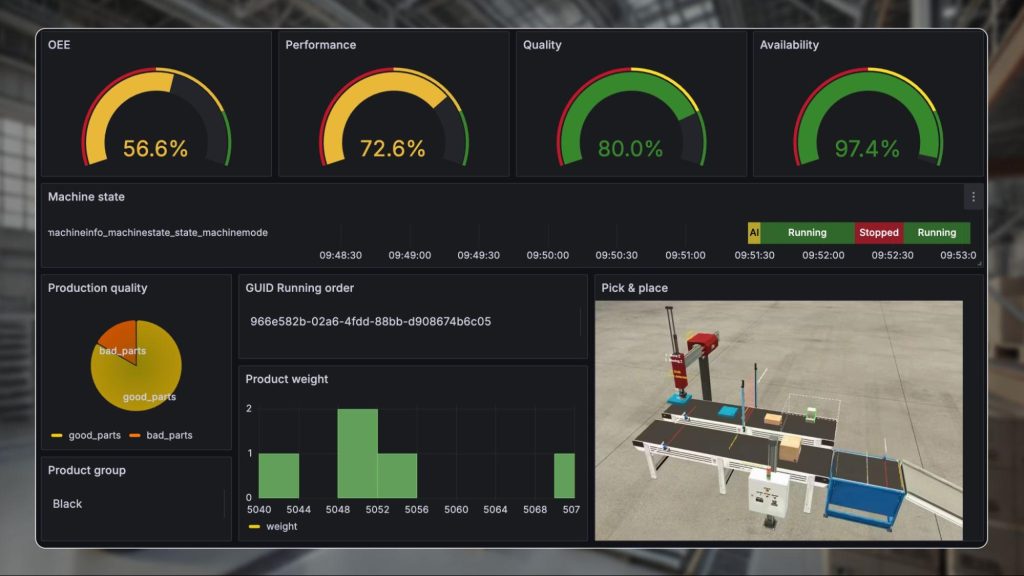
- Lack of real-time visibility into OEE (Overall Equipment Effectiveness) prevents managers from identifying the root causes of waste and energy spikes.

Solutions
- Centralized Real-Time Infrastructure Monitoring
- Fault-Tolerant and High-Availability Platforms
- Predictive Analytics and Condition Monitoring
- Dedicated OT Cybersecurity
- Automated Alarm Management and Event Reporting
- 30 %
- 20 %
- 15 %
- Optimized scheduling and reduced changeover times allow for higher production volumes without adding new lines.
- Automated process control significantly lowers scrap rates and ensures consistent product palatability.
- Real-time monitoring identifies high-intensity anomalies, allowing for immediate adjustments to dryers and utility systems.
- Elimination of Unplanned Downtime: Predictive insights shift maintenance to planned windows, protecting critical production cycles and extending asset life.
Frozen Food & Ready-to-Eat
Manufacturers face increasing pressure to maintain strict temperature consistency and food safety compliance while managing rising refrigeration costs. Unplanned downtime and manual monitoring often lead to data silos, production inefficiencies, and the risk of costly product spoilage.
Key Challenges:
- Temperature and Humidity Fluctuations
- Inconsistent climate control across production and storage leads to product crystallization, spoilage, and compromised food safety.
- High Energy Consumption
- Industrial refrigeration is energy-intensive; without real-time visibility, plants cannot identify inefficient cooling cycles or peak-load penalties.
- Manual Monitoring and Compliance Gaps
- Relying on manual logs for temperature checks increases the risk of human error and makes audit-ready traceability difficult to maintain.
- Maintenance Pressure on Critical Assets
- Unplanned failure of compressors, freezers, or conveyors can halt entire production lines, leading to immediate waste in the RTE sector.
Solutions
- Real-Time Cold Chain Monitoring
- Automated Traceability and Compliance
- AI-Driven Energy Optimization
- High-Availability Infrastructure
- 20 %
Energy Costs
- 30 %
- 15 %
Energy Costs
- Achieved through precision control of refrigeration systems and the elimination of inefficient cooling cycles.
- Zero Spoilage Due to Process Deviations: Early warning alerts for temperature shifts allow for immediate intervention before products are compromised.
- Automated data collection reduces the administrative burden on quality teams and ensures 100% audit readiness.
- Increased Equipment Lifetime: Predictive insights for refrigeration and packaging assets shift maintenance to planned windows, reducing emergency repair costs by 25%.
Pharmaceutical & Life Sciences
Manufacturers face mounting pressure to maintain strict regulatory compliance while improving production agility. Manual processes and fragmented data often lead to quality deviations, extended validation cycles, and the risk of costly paper-based reporting errors across complex operations.
Key Challenges:
- Manual Paper-Based Inefficiencies
- Reliance on paper batch records and manual data entry increases the risk of human error, leading to data integrity issues and “blind spots” during critical production phases.
- Slow Deviation Investigation
- Without real-time data, root cause analysis for quality deviations can take weeks, delaying batch releases and disrupting validation schedules.
- Audit Readiness and Traceability Burdens
- Preparing for GMP or FDA audits is often a resource-heavy manual process, making it difficult to demonstrate end-to-end ingredient and process genealogy instantly.
- Unplanned Downtime and Validation Risk
- Sudden equipment failure not only halts production but can also invalidate a batch or require re-validation of the entire line, leading to substantial financial loss.
- Siloed Infrastructure
- Data trapped within separate production, utility, and enterprise systems prevents managers from seeing a unified view of plant performance and energy intensity.
Solutions
- Digital Batch Management and Workflow Automation
- Centralized Industrial Historian
- Real-Time Traceability and Reporting
- Predictive Asset Health and High Availability
- Unified Operations Center
- 30 %
- 80 %
- 25 %
- Real-time data access allows quality teams to identify and resolve root causes in hours rather than weeks.
- Achieved by eliminating paper-based manual tasks, reducing manual data entry, and optimizing resource utilization.
- Improved Audit Readiness: Move from days of manual preparation to instant audit-ready reporting, significantly reducing compliance risk and administrative burden.
- Proactive asset monitoring and high-availability infrastructure ensure that critical validation and production schedules are strictly met.
- Enhanced Quality and Reduced Waste: Automated process controls ensure “Golden Batch” consistency, leading to a measurable reduction in scrapped batches and reworks.
Data Center & Critical Infrastructure
Data center operators face increasing pressure to maintain maximum uptime while managing rising energy costs and complex infrastructure. Fragmented visibility and manual monitoring often lead to slow incident response, operational risks, and hidden inefficiencies in mission-critical environments.
Key Challenges:
- Maximum Uptime vs. Increasing Complexity
- Managing disparate power, cooling, and facility systems across distributed sites makes it difficult to maintain the “five nines” (99.999%) of reliability required by modern SLAs.
- Rising Energy and Operational Costs
- Without real-time Power Usage Effectiveness (PUE) visibility, cooling and power consumption remain unoptimized, leading to excessive utility expenses and lower sustainability scores.
- Siloed Data and Manual Monitoring
- Relying on fragmented dashboards or manual checks creates operational “blind spots.” This delay in alarm recognition leads to slow troubleshooting during critical events.
- Evolving Cybersecurity Threats
- As operational technology (OT) becomes more connected to the network, critical power and cooling infrastructure are exposed to sophisticated cyber threats that can bypass traditional IT security.
- Maintenance Uncertainty
- Reactive maintenance on critical assets like UPS systems or generators leads to emergency repair costs and a higher risk of failure during peak demand.
Solutions
- Centralized Real-Time Infrastructure Monitoring
- Fault-Tolerant and High-Availability Platforms
- Predictive Analytics and Condition Monitoring
- Dedicated OT Cybersecurity
- Automated Alarm Management and Event Reporting
- 40 %
Incident Detection and Response
- 99.999%
Uptime
- 15 %
Energy Consumption
- Eliminate the risk of system crashes and data loss in your monitoring and control layers through high-availability architecture.
- Improve PUE by optimizing cooling cycles and correlating power usage with real-time IT loads to identify waste.
- Centralized alarm management and automated data correlation allow engineers to identify and resolve issues before they escalate.
- Reduced Manual Monitoring Workload: Automated data collection and reporting reduce the administrative burden on facility managers by up to 30%.
- Enhanced Asset Lifespan: Shifting to a predictive maintenance model reduces emergency repair costs and extends the lifecycle of expensive power and cooling hardware.
Semiconductor & OSAT & EMS
Semiconductor and electronics manufacturers must manage extreme precision and continuous uptime to stay competitive. Fragmented data and unplanned disruptions lead to yield loss, high energy costs, and production delays that impact global supply chain commitments.
Key Challenges:
- The High Cost of Unplanned Downtime
- In high-precision environments, even a momentary power fluctuation or equipment failure can lead to massive yield loss and scrapped batches, costing millions in lost revenue.
- Process Variability and Yield Loss
- Without real-time visibility into machine performance and environmental conditions, identifying the root cause of a yield drop is slow and reactive, leading to prolonged quality issues.
- Utility and Facility Reliability Risks
- Critical manufacturing operations depend on stable power, cooling, and vacuum systems. A failure in these facility-side utilities can halt the entire cleanroom operation.
- Data Silos and Manual Reporting
- Production, facility, and maintenance data are often trapped in separate systems. Manually consolidating this information is time-consuming and prevents engineers from making fast, data-driven decisions.
- Increasing Energy Intensity
- Managing the energy footprint of cleanrooms and high-power machinery is difficult without granular consumption data, leading to unoptimized utility costs.
Solutions
- Real-Time Equipment and Facility Monitoring
- Fault-Tolerant and High-Availability Infrastructure
- Predictive Asset Analytics
- Industrial Data Historian and Analytics
- Secure OT Cybersecurity
- 40 %
Unscheduled Downtime
- 99.999%
Uptime
- 15 %
Energy Costs
- 25% Reduction in Unscheduled Downtime: Achieved through the combination of predictive maintenance insights and fault-tolerant computing infrastructure.
- Significant Yield Improvement: Real-time process oversight and faster troubleshooting reduce scrap and ensure consistent product quality across complex production cycles.
- Precision monitoring of utility systems allows facilities to optimize cooling and power loads, reducing the overall energy intensity of manufacturing.
- Faster Root Cause Analysis: Moving from manual reporting to automated dashboards reduces the time required to investigate deviations from days to minutes.
- Scalable Operational Excellence: Standardized visibility across multiple lines and sites allows for faster scaling of production and consistent KPI tracking across the enterprise.
Consumer Packaged Goods Industry
Consumer packaged goods manufacturers face volatile demand and increasing product variety. Legacy systems and manual reporting often lead to unplanned downtime, high waste, and limited visibility, making it difficult to maintain competitive margins and consistent product quality across complex operations.
Key Challenges:
- Complex Changeovers and Scheduling
- High demand for product variety leads to frequent line transitions. Without digital scheduling, these changeovers cause excessive downtime and unoptimized resource allocation.
- Lack of Real-Time Visibility
- Production data is often siloed or manually recorded, preventing managers from identifying bottlenecks, yield losses, or equipment inefficiencies until after the shift has ended.
- Rising Costs and Sustainability Pressures
- High energy intensity and raw material costs, combined with product giveaway and scrap, erode margins and hinder progress toward corporate sustainability targets.
- Equipment Reliability Risks
- High-speed packaging and processing lines are susceptible to unplanned failures. Without proactive monitoring, these outages disrupt delivery schedules and increase emergency repair costs.
- Traceability and Compliance Gaps
- Managing ingredient genealogy and quality consistency across multiple sites is difficult with disconnected systems, increasing the risk during audits or recalls.
Solutions
- Unified Production Monitoring and Dashboards
- Advanced Scheduling and Resource Optimization
- Predictive Maintenance and Condition Monitoring
- Digital Batch Tracking and Quality Control
- Energy and Utility Management
- Secure OT Infrastructure
- 15%
Equipment Uptime
- 20 %
Manufacturing Costs
- 20% – 30% Reduction in Manufacturing Costs: Achieved through the elimination of manual data entry, reduced energy waste, and optimized ingredient utilization.
- 15% – 25% Increase in Equipment Uptime: Predictive insights shift maintenance strategies from reactive to proactive, extending asset life and protecting production cycles.
- Improved OEE and Throughput: Real-time bottleneck identification and streamlined changeovers allow for higher production volumes using existing assets.
- Faster Root Cause Analysis: Automated data correlation reduces the time required to investigate quality deviations or process failures from days to minutes.
- Enhanced Operational Agility: Accurate, real-time visibility allows for faster scaling of production and better coordination between the plant floor, warehouse, and enterprise management.